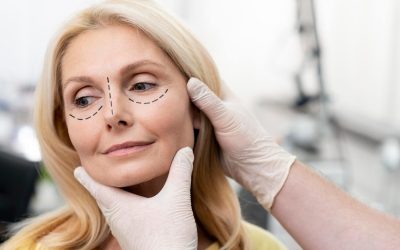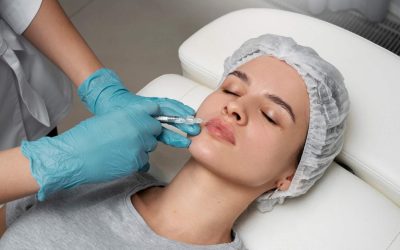

Non-surgical rhinoplasty, often referred to as liquid rhinoplasty, is a cosmetic procedure designed to refine the appearance of the nose without surgery. Rather than altering bone or cartilage, this approach uses injectable fillers to reshape contours, smooth irregularities, and improve overall facial balance. Nose contouring focuses on visual correction, meaning it enhances proportion and symmetry instead of physically reducing nose size. For patients seeking subtle refinement with minimal downtime, non-surgical rhinoplasty can be an effective option when performed by an experienced provider.
Key Takeaways
- Non-surgical rhinoplasty improves nasal appearance without surgical intervention
- Nose contouring works through strategic volume placement, not tissue removal
- Liquid rhinoplasty produces temporary but predictable results
- Candidate selection and technique are critical for safety
- Facial balance matters more than nose shape alone
What Non-Surgical Rhinoplasty Is Designed to Achieve
Non-surgical rhinoplasty is best understood as a refinement procedure, not a reconstructive one. Its purpose is to enhance how the nose appears in relation to the rest of the face by improving symmetry, smoothness, and proportion.
This treatment is commonly used to address mild cosmetic concerns such as dorsal humps, uneven bridge lines, and slight tip irregularities. By carefully placing filler in targeted areas, providers can alter how light reflects off the nose, creating the illusion of straighter lines and improved alignment. Because the underlying nasal structure remains unchanged, results are temporary but adjustable.
What Nose Contouring Cannot Correct
While liquid rhinoplasty can create impressive visual improvements, it has clear limitations. Understanding what the procedure cannot do is just as important as understanding its benefits.
Nose contouring cannot:
- Reduce the overall size or width of the nose
- Correct significant structural deviation
- Address breathing or functional concerns
- Permanently change bone or cartilage
Patients with these concerns are typically better served by surgical evaluation rather than injectable treatment.
How Nose Contouring Works From an Anatomical Perspective
The nose is a complex structure with limited soft tissue and a dense network of blood vessels. This makes nose contouring one of the most technically demanding injectable procedures in facial aesthetics.
During non-surgical rhinoplasty, fillers are placed with precision to support specific anatomical landmarks. The goal is not to add bulk, but to guide shape and proportion. Small amounts of filler can create significant visual change, which is why conservative technique and anatomical expertise are essential.
Unlike other areas of the face, the nose allows very little margin for error. For this reason, experience and careful planning matter more here than almost anywhere else.
Liquid Rhinoplasty vs Surgical Rhinoplasty
Liquid rhinoplasty and surgical rhinoplasty serve different patient needs and should not be viewed as interchangeable.
| Consideration | Liquid Rhinoplasty | Surgical Rhinoplasty |
| Technique | Injectable nose contouring | Structural modification |
| Permanence | Temporary | Permanent |
| Downtime | Minimal | Extended |
| Anesthesia | None or local | General or local |
| Best suited for | Mild cosmetic refinement | Structural or functional correction |
Liquid rhinoplasty is often chosen for subtle enhancement, while surgery is appropriate for patients seeking permanent or functional changes.
Who Typically Benefits Most From Non-Surgical Rhinoplasty
Ideal candidates for non-surgical rhinoplasty tend to have specific, limited concerns and realistic expectations.
Patients who benefit most often:
- Have mild contour irregularities rather than major deformities
- Want subtle refinement, not dramatic change
- Prefer minimal downtime and reversible results
- Understand the temporary nature of fillers
For some individuals, liquid rhinoplasty also serves as a trial step before committing to surgery.
Situations Where Liquid Rhinoplasty May Not Be Appropriate
Non-surgical rhinoplasty is not suitable for every patient. In some cases, fillers may camouflage issues rather than resolve them.
This approach may not be recommended for individuals who:
- Want to make their nose smaller
- Have significant nasal deviation
- Experience breathing difficulties
- Have complex anatomy from prior surgery
Responsible providers will advise against treatment when expectations cannot be met safely.
Benefits of Liquid Rhinoplasty Beyond Aesthetics
One of the reasons liquid rhinoplasty has gained popularity is its practicality.
Patients often appreciate that:
- Results are visible immediately, with refinement possible during the visit
- There is little to no downtime after treatment
- Adjustments can be made as facial balance changes over time
- There is no permanent commitment
These factors make nose contouring appealing for patients who value flexibility and control.
Safety Considerations in Non-Surgical Rhinoplasty
Safety is the most critical aspect of nose contouring. The vascular anatomy of the nose requires advanced knowledge and careful technique.
Safe treatment depends on:
- Conservative filler choice and placement
- Slow, controlled injection technique
- Thorough patient screening
- Immediate management protocols if concerns arise
This is not an area where shortcuts or inexperience are acceptable.
Longevity and Maintenance of Results
Results from non-surgical rhinoplasty typically last between nine and eighteen months. Longevity varies based on the filler used, injection depth, and individual metabolism.
Because results fade gradually, maintenance treatments can be planned conservatively, allowing for ongoing refinement rather than abrupt change.
Nose Contouring as Part of Overall Facial Harmony
Effective nose contouring considers the entire face. The nose plays a central role in profile balance, influencing how the lips, chin, and jawline are perceived.
When performed with facial harmony in mind, non-surgical rhinoplasty can enhance overall proportions without drawing attention to the nose itself. This balanced approach helps maintain natural-looking results.
Why Provider Judgment Matters
The success of non-surgical rhinoplasty depends not only on technique, but on judgment. Knowing when to treat, how much filler to use, and when to recommend alternatives is essential.
At Eterna Cosmetic Surgery, non-surgical rhinoplasty is approached through careful assessment of anatomy, safety, and realistic outcomes. The focus is on whether nose contouring can genuinely achieve the patient’s goals while preserving facial balance and minimizing risk.
Frequently Asked Questions
Is non-surgical rhinoplasty reversible?
Many fillers used for liquid rhinoplasty can be adjusted or dissolved if needed.
Does liquid rhinoplasty make the nose bigger?
When done properly, it improves proportion rather than increasing perceived size.
Can fillers move in the nose?
Migration risk is low when proper technique and product selection are used.
How soon can normal activities resume?
Most patients return to daily activities immediately.
Can this procedure replace surgical rhinoplasty?
No. It is an alternative for select cosmetic concerns, not a substitute for surgery.